
Mohs Surgery
Trust our trained surgeons in Mobile and Daphne, Ala.
On-Site Skin Cancer Treatment
Mohs surgery is a highly specialized dermatologic surgery technique for treating skin cancer. It offers a cure rate of up to 99%, even for cancers that have been previously treated using other methods.
Sunrise Dermatology has two full-time, fellowship-trained Mohs surgeons on staff. We offer on-site diagnosis and treatment of skin cancer (including melanoma) and Mohs reconstructive surgery.
Fellowship-Trained Surgeons

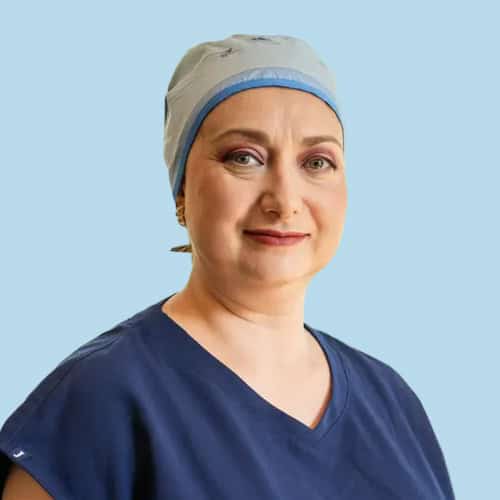
We offer Mohs surgery at both our Daphne and Mobile office locations, bringing advanced skin cancer care closer to our patients across Alabama’s Gulf Coast.
Our surgeons are fellowship-trained American College of Mohs Surgery (ACMS) members, which means they have completed one or two years of additional training under the direction of skilled practitioners.
What Is Mohs Surgery?
Mohs micrographic surgery is the most advanced and effective treatment procedure for skin cancer available today. The procedure is performed by specially trained surgeons who have completed fellowship training in addition to a three-year dermatology residency.
The Mohs procedure has been continually refined since it was initially developed by Dr. Frederic E. Mohs in the 1930s. With the Mohs technique, physicians are able to see beyond the visible disease to precisely identify and remove the entire tumor, layer by layer while leaving the surrounding healthy tissue intact and unharmed. As the most exact and precise method of tumor removal, it minimizes the chance of re-growth and lessens the potential for scarring or disfigurement.
Mohs surgeons are specially trained in surgery, pathology, and reconstruction. Mohs surgery has the highest cure rate of all treatments for skin cancer — up to 99% — with the best cosmetic outcome possible. The Mohs technique is the treatment of choice for cancers of the face and other sensitive areas as it relies on the accuracy of a microscopic surgical procedure to trace the edges of the cancer and ensure complete removal of all tumors during the initial surgery.
To learn more about Mohs surgery, visit the American College of Mohs Surgery website.
Skin Cancer Risk & Treatment
Living on the Gulf Coast, we know the areas beautiful beaches and outdoor activities are a draw all year. At Sunrise Dermatology, it is our goal to keep our patients’ skin healthy by encouraging regular skin care screenings and by offering treatments designed for positive results.
We recommend annual skin cancer screenings, especially if you have fair skin, a family history of skin cancer, extensive sun exposure or use the tanning bed. Call our office to schedule your skincare exam with our experienced medical team today.
As skin cancer specialists, we strive to ensure that our patients fully understand their skin cancer and which treatment options best suit this diagnosis. The three main types of skin cancer are basal cell carcinoma, squamous cell carcinoma and malignant melanoma.
Basal cell carcinoma (BCC), the most common type of skin cancer, is often found on the face, neck, and other parts of the body where the skin has experienced chronic sun exposure or tanning bed use. A BCC can appear as an open sore, a red patch or a pink, pearly growth. This type of skin cancer is easily treated if caught early.
Squamous cell carcinoma (SCC) is the second most common type of skin cancer. It occurs most commonly on the face, neck, scalp, or locations exposed to chronic sun. SCC can also occur on the mucosal surfaces of the mouth and genitalia. This type of skin cancer may appear as a wart-like growth, an open sore or a scaly and crusty lesion.
Melanoma is considered one of the most dangerous and aggressive types of skin cancer. These lesions are typically dark brown or black but can also be pink or sometimes even white or blue. Intense sun exposure, tanning bed use, and family history are all risk factors for the development of melanoma. Irregularly shaped, changing, non-healing or bleeding moles should be evaluated by your skin care expert. Melanoma is typically cured by surgical intervention if caught early.
Concerned About a Spot on Your Skin? Schedule a skin cancer screening with Sunrise Dermatology today.
Skin Cancer FAQs
Skin cancer is the abnormal, uncontrolled growth of skin cells caused by radiation from the sun. One in five people will develop skin cancer in their lifetime, says the American Academy of Dermatology (AAD).
Risk factors include pale skin, family history of skin cancers, being over 40 years old and regular sun exposure. Fortunately, skin cancer is almost always curable if detected and treated early.
Most adults benefit from annual skin exams, while patients with higher risk factors may need more frequent screenings. The right schedule depends on your personal risk factors, including your age, skin type, family history, sun exposure, and any previous history of skin cancer. Your Sunrise dermatologist can recommend the best screening schedule for your needs.
A skin cancer screening is a visual examination of your skin performed by a dermatology provider. During the exam, your provider checks moles, freckles, spots, and other lesions from head to toe, looking for suspicious changes or irregular features. If an area appears concerning, a biopsy may be recommended for further evaluation.
Treatment depends on the type, size, and location of the cancer. Many skin cancers can be treated successfully when detected early. Treatment options may include surgical removal, Mohs surgery, topical medications, freezing treatments, or other specialized therapies. Your Sunrise dermatologist will explain the best approach based on your diagnosis.
No. Many moles and growths are harmless. However, it can be difficult to tell the difference between a benign lesion and skin cancer without a professional evaluation. That is why it’s important not to ignore spots that change or are unusual.
The three most common forms of skin cancer are basal cell carcinoma, squamous cell carcinoma, and melanoma. About 80-85% of skin cancers are basal cells, affecting the uppermost layer of the epidermis. Squamous cell carcinoma accounts for 10% of all skin cancers and affects cells in the middle layer of the epidermis. The most serious and rare skin cancers are melanomas. Melanomas are dangerous because they can metastasize quickly. Melanomas are the leading cause of skin cancer deaths. Skin cancer is highly treatable when it’s caught and treated early.
Daily sun protection is one of the best ways to reduce your risk. This includes wearing broad-spectrum sunscreen, protective clothing, sunglasses, and hats, while also limiting excessive sun exposure during peak daylight hours. You should also avoid tanning beds and monitor your skin for changes.
Yes. Patients who have had skin cancer are at a higher risk of developing another skin cancer in the future. Ongoing skin checks, sun protection, and follow-up appointments are important parts of long-term skin health.
Traditionally, skin cancers have been treated by surgically removing large areas of skin. This leaves the patient with a sizable wound and possibly a long, wide scar. Additionally, a small percentage of these patients will still have cancer remaining in their bodies, requiring additional surgery.
Now patients diagnosed with skin cancer can have Mohs surgery, which offers a greater than 99% clearance rate. This state-of-the-art surgery is a delicate and precise procedure that spares as much skin as possible, providing the most optimal cosmetic outcome. Most importantly, when patients leave the office, they know all the cancer has been removed.
Mohs surgery has the highest cure rate — up to 99% for nonmelanoma skin cancers, such as basal cell carcinoma and squamous cell carcinoma.
It is appropriate for most skin cancers and is especially suitable for skin cancer that:
- Is in an area where it’s important to preserve healthy tissue for best functional and cosmetic results
- Has been treated previously and has come back
- Is located near scar tissue
- Is large, greater than 1 cm in diameter
- Does not have clearly defined edges
- Is growing rapidly or uncontrollably
- Is an aggressive subtype (i.e., sclerosing or infiltrating basal cell carcinoma)
- Develops in immunocompromised patients
Yes. While skin cancer is more common in older adults, it can develop at any age. Younger patients who spend significant time in the sun, use tanning beds, or have a family history of skin cancer may face increased risk. Melanoma is one of the more common cancers diagnosed in young adults.